She Came Down on a Swing, and She Never Really Got Off It
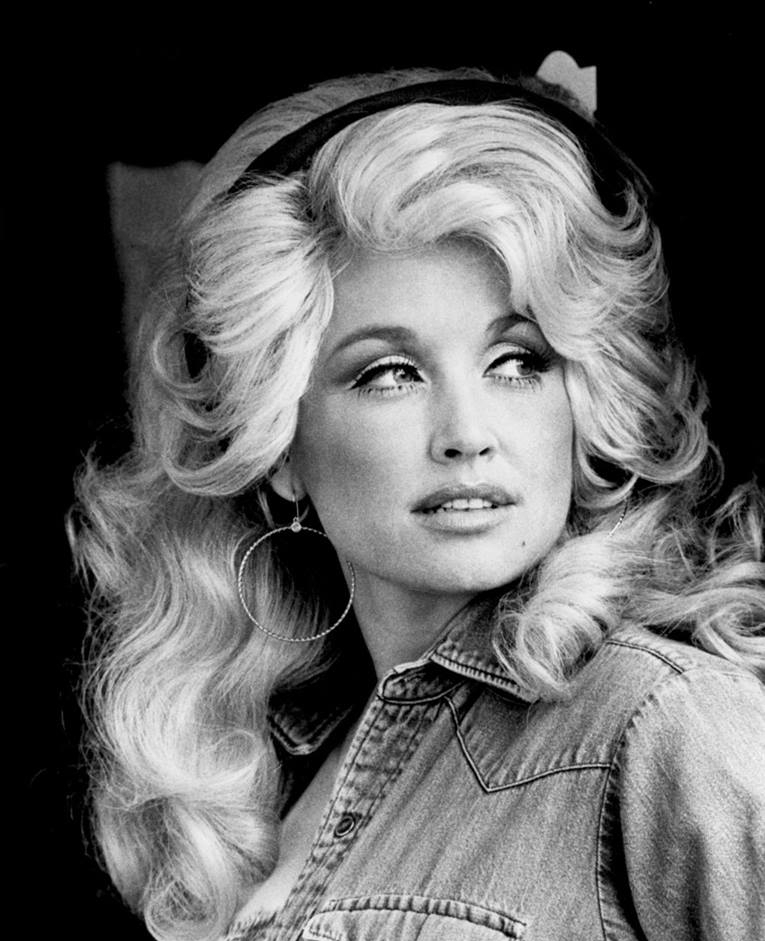
I never met her.
Better than four decades in this business and I have met a lot of people you have heard of. Some of them were exactly what you’d hope. Some of them were a long afternoon. But Dolly Parton is the one that got away from me, and I’ve been quietly sore about it for a couple of decades now. Today it stopped being a professional regret and turned into something else.
Dolly Rebecca Parton died peacefully this morning at her home in Nashville. She was 80 years old. Her family announced it in a video posted to her own social accounts, and asked for a small, private service. They described her as living a rhinestone life that shone bright enough for the world to see.
That’s about right. She was visible from anywhere.
What a kid sees before he has the words for it
My first Dolly memory is a television set and a dinner plate.
She had a syndicated variety show — just called Dolly! — that ran a single season out of Opryland in 1976 and ‘77. The opening was the thing. She came down from the fly gallery on a swing, floating into frame like the whole building had been built to deliver her, while “Love Is Like a Butterfly” played her in.
I had just turned five years old. I had no vocabulary for what I was looking at. I just knew the television got brighter when she was on it, and that dinner could wait.
That show only lasted one season, and it lasted that long because eighteen-hour days were tearing up her voice and she asked out of the contract. High ratings, and she walked anyway. That’s a detail worth sitting with, because it’s the whole woman in miniature: she’d take the swing, the sequins and the spectacle, right up until the day it started costing her the thing that actually mattered. Then she’d leave.
The thing that actually mattered was the songs.
She wrote more songs than most stations have in the library
Here’s the number that ought to stop you: more than 3,000 songs. Forty-nine albums. Eleven Grammys. North of a hundred million records sold across a career that ran better than six decades.
Three thousand songs. Our entire music library isn’t three thousand songs. She wrote a radio station.
And she never let anybody misfile her. She understood exactly what the wig and the nails and the figure were doing for her — she made jokes about it for fifty years, and the jokes were always better than the ones being made at her expense — but she was relentlessly clear that the songwriting was the real freight. The look got her in the room. The pen got her out of the Smoky Mountains.
She came from Pittman Center, Tennessee, born in January of 1946, into a house that at one point didn’t have electricity. She never dressed that up and she never hid from it either. She just wrote it down. “Coat of Many Colors” is a song about a mother sewing rags into something a child could be proud of, and if it doesn’t get you the first time, wait five years and try it again.
Why a station that doesn’t play country is writing this
Let’s be straight with each other, because you’ve been listening to us long enough to deserve it. Power88.FM does not play country music. We play the greatest hits of the ’70s, ’80s and ’90s, and country was never our lane.
Dolly got in anyway. She didn’t get in through the side door either.
In 1977 she cut “Here You Come Again” — a song she didn’t even write, handed to her by Barry Mann and Cynthia Weil — and it went to No. 3 on the Hot 100. That was the crowbar. First real pop hit. She reportedly begged her producer to lay a steel guitar into it so she wouldn’t sound like she’d abandoned anybody back home. That’s Dolly all over: crossing over without ever once pretending she came from somewhere else.
Then in 1980 she wrote and sang “9 to 5,” and it went to No. 1 on the Hot 100 and sat on the chart for twenty-six weeks. If you’re driving I-80 out of Fairfield at six-forty in the morning with a lunch on the seat beside you, that record is not nostalgia. That record is a documentary.
And in 1983 she and Kenny Rogers cut “Islands in the Stream,” and it went to No. 1, and twenty-five weeks later it still hadn’t left the chart. It has never left anything.
What that song does in a parking lot in Solano County
I’ve watched it happen more times than I can count. We roll the Beat Machine out to an event, we’re set up in a lot somewhere in this county, and “Islands in the Stream” comes up in the log.
Couples stop walking.
Not all of them, but enough of them, and always the same way — somebody’s hand finds somebody’s hand, and two people who were headed to the car are suddenly dancing on asphalt in front of strangers, and they are happy about it. Not ironic. Not performing. Just glad, in public, in the middle of a Tuesday.
You can’t buy that. You can’t program it. A record either has it or it doesn’t, and that one’s had it since Reagan’s first term.
That’s the answer to why we’re running two thousand words on a country singer. She was never only a country singer. She was in your kitchen, in your car, at your wedding reception, and on a golf course patio in Fairfield making two people who’ve been married thirty years act like they haven’t.
Whitney’s biggest record was Dolly’s goodbye letter
Most of our audience knows the biggest ballad of the 1990s. Fewer know where it came from.
In 1973, Dolly wrote a song to tell Porter Wagoner she was leaving. Seven years on his show, and she needed out to build her own career, and rather than fight about it she wrote him a letter that said: I’m going, and I’ll always love you, and I hope life is good to you. She recorded it in 1974.
Nineteen years later Whitney Houston sang it for The Bodyguard and it became the best-selling single by a woman in the history of recorded music.
Think about the arithmetic on that. A woman quit a job, and instead of burning the place down on her way out, she wrote something so gracious that it went on to earn her a fortune twice over and comfort about a billion people. That is not a career strategy. That is a personality.
We’re playing Whitney’s version this week, and now you know whose pen it came out of.
The part everybody’s going to say, because it’s true
She was kind.
She was the closest thing to a saint that country music ever produced, and I don’t say that lightly, and I’ve had better than four decades to compile evidence to the contrary. There isn’t any worth mentioning. She joked constantly and she was never cruel with it. She got asked, for sixty years, by every faction in this country, to come stand on their side of the line and say the thing they wanted said — and she declined, every single time, with such warmth that nobody could even get properly mad about it.
We take some grief around here for staying out of politics. It’s in our own style guide, and it’s a deliberate choice. Dolly ran that same play at global scale for six decades and came out the other end as maybe the last person in America that everybody still liked.
Turns out you can have an opinion without conscripting an army. She proved it. Loudly, in rhinestones, for sixty years.
The part that hurts
Here’s the piece of this I can’t write around.
She married Carl Dean in 1966. Sixty years. He stayed almost entirely out of public view that entire time — the most famous woman in America, and the man she went home to never once made himself the story.
Carl died in March of 2025.
In a video to fans earlier this year, Dolly said out loud what a lot of us have watched happen in our own families. She said that when Carl was sick — and he was sick a long time — and then after he was gone, she stopped taking care of herself. She let things go that she shouldn’t have. She spent this year in and out of it, canceled a Las Vegas run in May, and joked that they were pulling more stones out of her in a year than a Tennessee rock quarry, because of course she did. She was still making the room laugh from inside the hospital gown.
“I’m not ready to die yet,” she said. She figured God wasn’t finished with her and she wasn’t finished working.
She posted a health update to her fans on Friday. She was gone by Tuesday.
Sixty years of being everybody’s Dolly, and the thing that finally took her down was loving one man very much for a very long time. I don’t know what to do with that except tell you about it and let you sit with it a minute, the way I’ve been sitting with it all afternoon.
What she left, and what you can do about it today
In 1995, because her own father couldn’t read or write, Dolly started mailing free books to children. One a month, from birth to age five, no charge, no income requirement, no strings.
That program has now given away more than 300 million books.
Three hundred million. Set that next to the Grammys and the Hall of Fame induction and the theme park and the hundred million records, and it’s not close. Twenty years from now, some kid in this county is going to graduate from something because a book showed up in the mail with a butterfly on it, and they will have no idea a woman in Nashville is the reason.
The program is expanding across California right now. If you’ve got a child or a grandchild under five, go to imaginationlibrary.com, put in your ZIP code, and find out whether it’s running where you live. It takes five minutes. If it isn’t there yet, they’ll tell you that too, and they’ll tell you how to change it.
That’s the move. Not a candle. A library card in the mail.
We’re playing her this week
Starting today we’re adding Dolly records to the rotation and we’ll be running a station tribute all week. “9 to 5.” “Islands in the Stream.” “Here You Come Again,” which is where the whole crossover started. And Whitney singing the goodbye letter.
Turn us on this week. Turn us up in the car. If you’re somewhere you can, and somebody’s hand is nearby, take it.
She closed every one of those variety shows the same way — speaking the last verse of “I Will Always Love You” straight down the barrel of the camera, telling everybody watching that she hoped life treated them kind and that they got everything they ever dreamed of.
She signed off that way every week to a country full of strangers.
I never met her. Neither did most of you.
Didn’t matter a bit. She got the message through anyway.
Power88.FM, streaming the greatest hits of all time.